

Somewhere in America right now a person is searching online (or asking their favorite LLM) “therapist near me that takes my insurance”.
Ten years ago the honest answer was: not many, not soon, and probably not on your plan. The therapists who took insurance were paid so little per session that most of the good ones stopped taking it.
If you lived outside a big metro, the nearest one who accepted new patients might be two hours away with a three-month wait. That was the state of outpatient mental health care in the richest country on earth.
Things have changed. It’s a very different world from when Tony Soprano went to see a shrink.

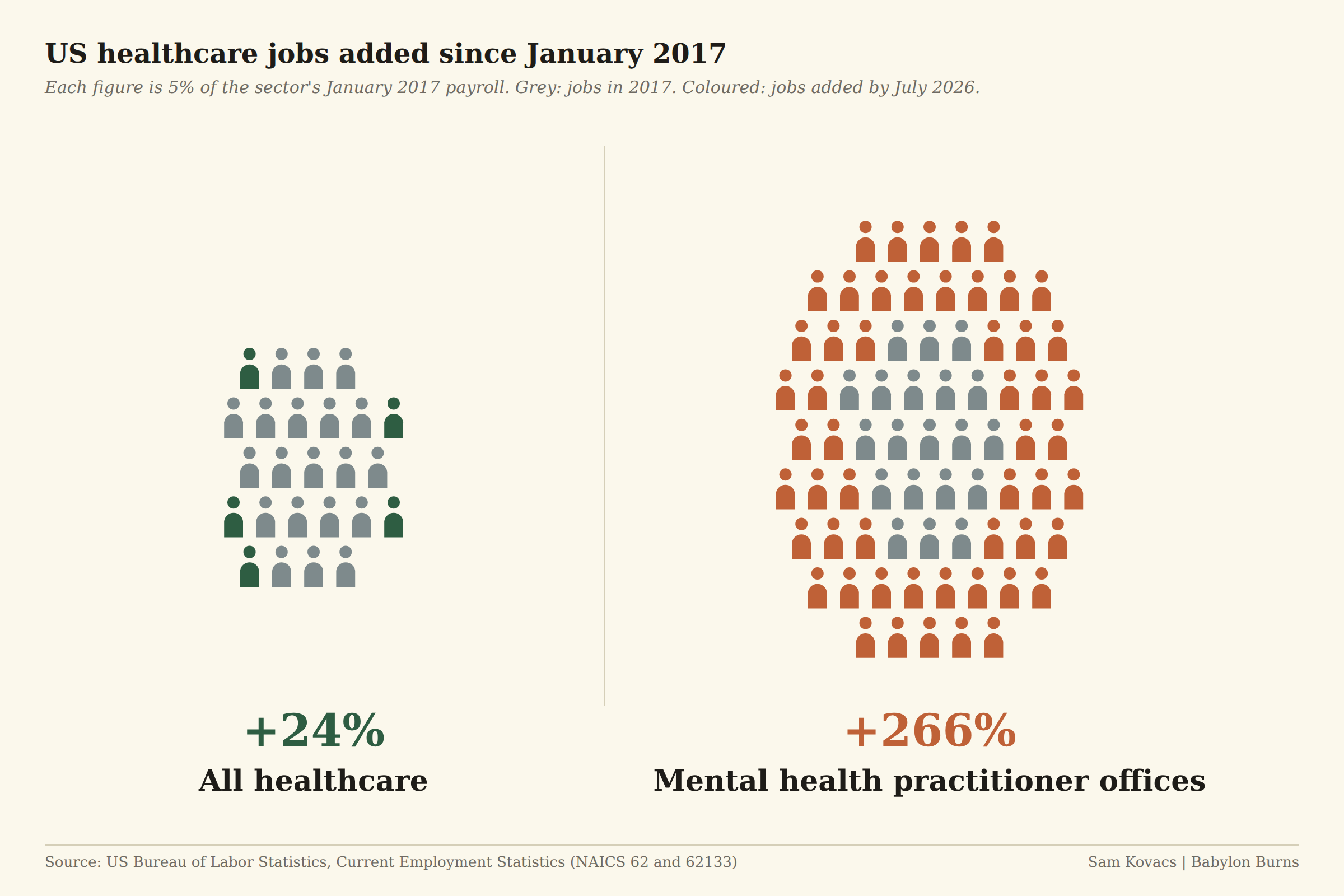
Over the past decade, 3 main things have changed, and together they’ve turned a cottage industry into an attractive investment proposition.
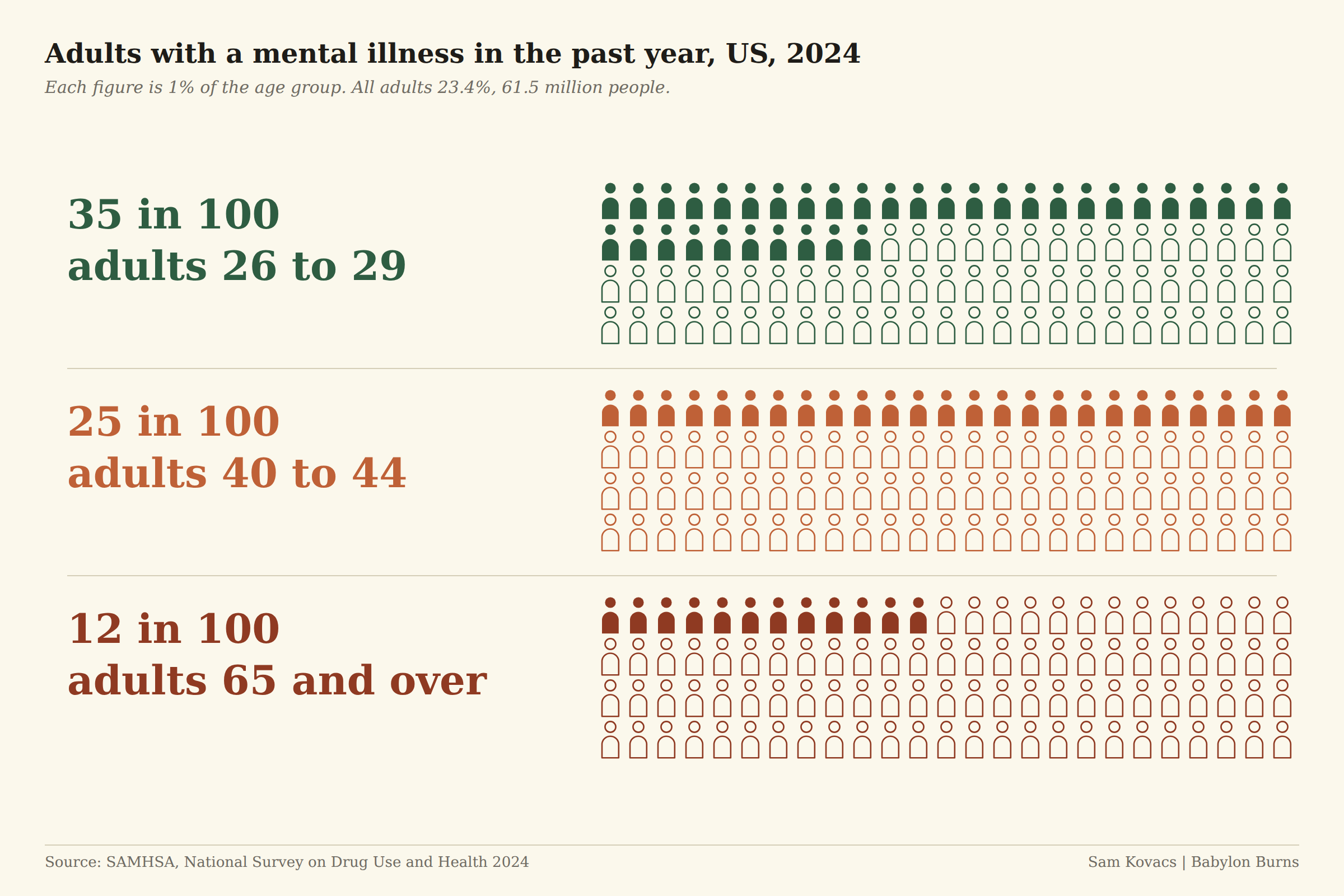
The first is an inflection in demand. 1 out of 5 American adults report a mental illness in any given year, and the share among people under 30 is higher and rising. The stigma that kept people from pursuing mental health related treatment has eroded extremely fast among generations entering the workforce, and they ask their employers for coverage the way earlier generations asked for dental.
The second is a change in the delivery mechanism. The 2020 lockdowns forced insurers to reimburse a video session at the same rate as an office visit. For the most part, that parity has held until today. Video sessions changed the business proposition of being a therapist significantly. A therapist in a rural county can now fill her calendar with patients from across the state.
The third is supply. The constraint in this industry is the clinicians, and specifically the administrative burden of being one. A licensed therapist running their own practice spends a large share of her week on billing and chasing claims. Many give up on insurance altogether and go cash-only, which shrinks the in-network pool further.
The alternative that’s emerged is salaried employment at scale: someone else handles the credentialing with a dozen payers, someone else runs the billing, the schedule fills itself from a web page or an app, and the clinician gets benefits and a predictable paycheck. For new graduates, for clinicians who don’t want to run a business, and for people who want to see patients and go home, it’s a better deal than the alternative, and the numbers of clinicians choosing it have grown every year.
The market is still almost entirely fragmented.
The largest employer of mental health clinicians in the country has a low-to-mid single-digit share of the profession. Then there are a few hundred regional groups and hundreds of thousands of solo and small practices.
This is a market prime for consolidation.
Why now?
The first attempt to consolidate this industry was a disaster. Between 2018 and 2021, private equity poured money into behavioural health roll-ups. The playbook was to buy regional practices at expensive multiples, stitch them together, and then go public.
You can continue reading a bit more of this article, for FREE, if you enter your email below.
I need you to level with me here. i spend a lot of time researching these opportunities and sending out information on them. I make part of the articles free, and part for paid members.
Joining for free it the easiest thing you can do to thank me, and it helps me more than you think it does. You’ll be exposed to my ideas, get some analysis and information for free, occasional stock picks, and it helps me feel good about myself.
