

Steve Clark grew up in a council house on the outskirts of London and left school when he was 17. To earn a living, he installed hi-fi systems until a friend of his got him a trainee job on the floor at Warburg, where he became the most profitable trader in his group.
After a failed first attempt at opening a fund, he opened Omni Global Fund. By the time Jack Schwager interviewed him for Hedge Fund Market Wizards, his fund had made money every single year since 2001 and was even up 15% in 2008 (when most hedge funds lost 22%). His worst drawdown during a period was a mere 7%.
Steve Clark told Schwager that he gives to traders who work for him one piece of advice, time and again: “Do more of what works and less of what doesn’t.”
Now that we are 3 months into running Babylon Burns, it’s time to take a hard look at what we have done so far, take stock of what is working and what isn’t, and make sure we do more of what is working.
Today I will go through what is working, what isn’t, and initiate new positions that expand on what is working, and set new targets to protect some gains and curtail some losses.
This is a complicated market. Since we started Babylon Burns on August 15, the S&P 500 is down 7%. In these environments, you want to be playing defense and protecting capital. This article will break down what I am doing to address it.
What is working?
On October 23, I shorted Nvidia at $212. Four days later, I covered it at $218. Then, on November 2, I shorted Nvidia. On November 10, I shorted it again.
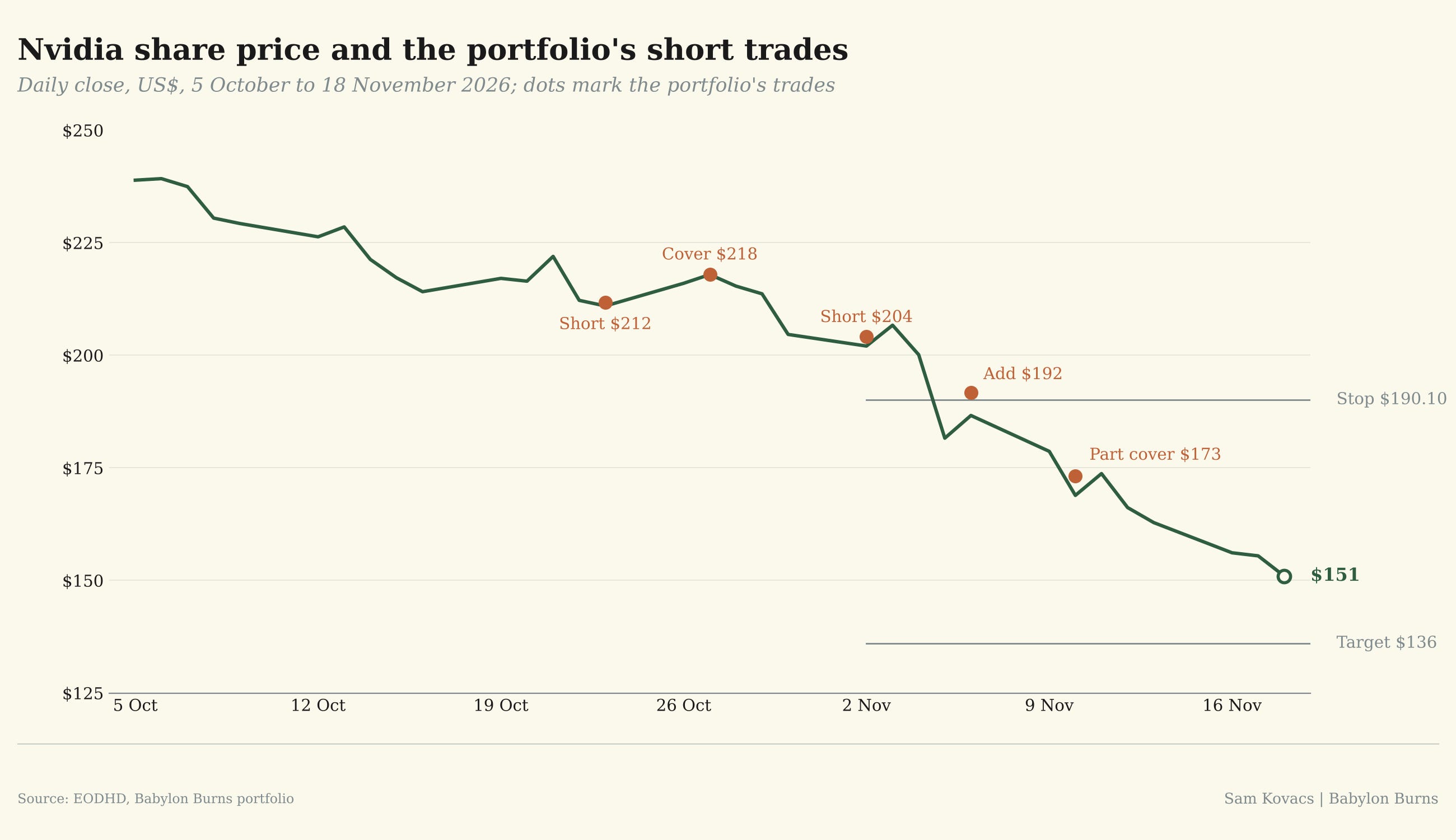
The position is now up 25% and is the biggest contributor to the portfolio.
The other short positions I have taken since then, are also working.
